问题:解释 Python 中的猴子补丁、其目的和潜在风险。
解决方案:
猴子补丁:
- 在运行时动态修改或扩展现有代码。
- 适用于错误修复、功能添加或定制。
影响和风险:
- 代码脆弱性和维护难题。
- 与库更新的兼容性问题。
- 调试复杂。
- 补丁之间的潜在冲突。
- 如果不小心操作,会有安全隐患。
最佳实践:
- 广泛记录补丁。
- 彻底测试补丁。
- 尽可能隔离补丁。
- 考虑子类化等替代方法。
- 注意版本兼容性。
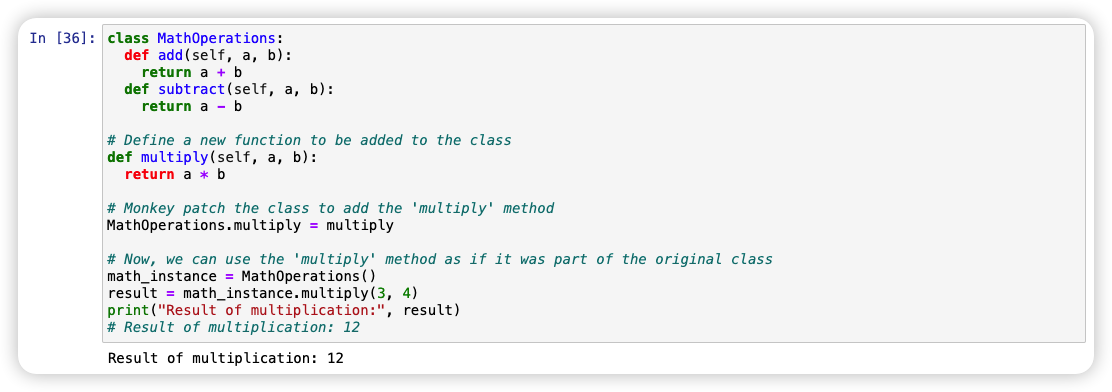
class MathOperations:
  def add(self, a, b):
    return a + b
  def subtract(self, a, b):
    return a - b

# Define a new function to be added to the class
def multiply(self, a, b):
  return a * b

# Monkey patch the class to add the 'multiply' method
MathOperations.multiply = multiply

# Now, we can use the 'multiply' method as if it was part of the original class
math_instance = MathOperations()
result = math_instance.multiply(3, 4)
print("Result of multiplication:", result)
# Result of multiplication: 12
猴子补丁是一种强大的技术,但应谨慎使用并采取适当的预防措施,以确保代码的可靠性和可维护性。


