问题: 解释计算机科学中线性(顺序)搜索的概念。举例说明如何在 Python 中执行线性搜索,并讨论其用法和局限性。
解决方案: 线性搜索又称顺序搜索,是一种简单的算法,用于在列表或数组中查找特定元素,方法是逐个迭代元素,直到找到目标元素或整个列表用完为止。
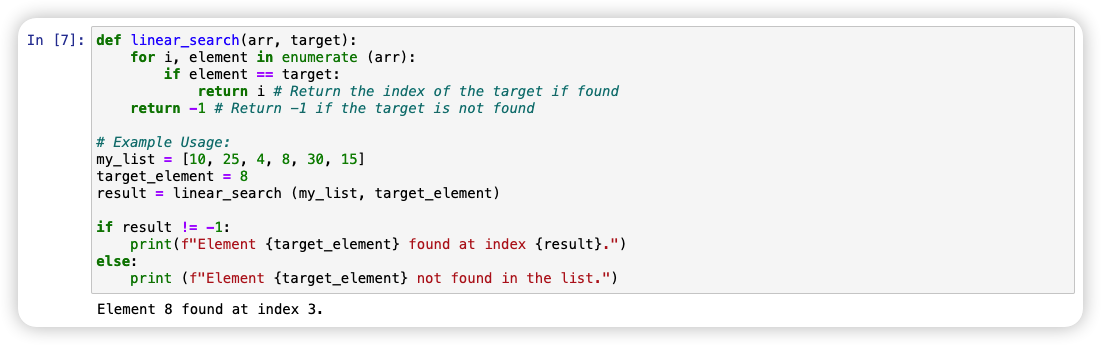
下面是一个如何在 Python 中执行线性搜索的示例:
def linear_search(arr, target):
    for i, element in enumerate (arr):
        if element == target:
                return i # Return the index of the target if found
    return -1 # Return -1 if the target is not found

# Example Usage:
my_list = [10, 25, 4, 8, 30, 15]
target_element = 8
result = linear_search (my_list, target_element)

if result != -1:
    print(f"Element {target_element} found at index {result}.")
else:
        print (f"Element {target_element} not found in the list.")
 使用方法:线性搜索简单明了,适用于中小型列表或数组。它易于实现,而且不需要对数据进行排序。一些常见的用例包括:
- 搜索未排序数据: 当您需要在未排序的数据集合中查找元素时,线性搜索是一个可行的选择。
- 查找首次出现: 线性搜索可用于查找列表中首次出现的元素。
- 实现其他搜索算法: 线性搜索通常被用作二进制搜索等更复杂搜索算法的基础模块。