问题:解释 Python 中类型转换的概念。描述用于类型转换的各种方法和函数,包括隐式和显式类型转换。举例说明 Python 中不同数据类型之间的转换。
解决方案:
Python 中的类型转换: 类型转换,也称为类型转换或数据类型转换,是将对象的数据类型从一种类型转换为另一种类型的过程。
在 Python 中,您可以在不同数据类型之间进行转换,以执行需要兼容类型的操作、比较或赋值。Python 支持隐式和显式类型转换。
隐式类型转换: 隐式类型转换也称为自动类型转换,是指 Python 在没有程序员显式指令的情况下自动将一种数据类型转换为另一种数据类型。这通常发生在执行不同数据类型之间的操作时。
x = 5 # Integer
y = 2.5 # Float
result = x + y # Integer and float are automatically converted to float
print(result) # 7.5 (result is a float)
 常用类型转换函数:
int(x) - 将 x 转换为整数。
float(x) - 将 x 转换为浮点数。
str(x) - 将 x 转换为字符串。
list(x) - 将 x 转换为列表。
tuple(x) - 将 x 转换为元组。
dict(x) - 将 x 转换为字典。
bool(x) - 将 x 转换为布尔值。
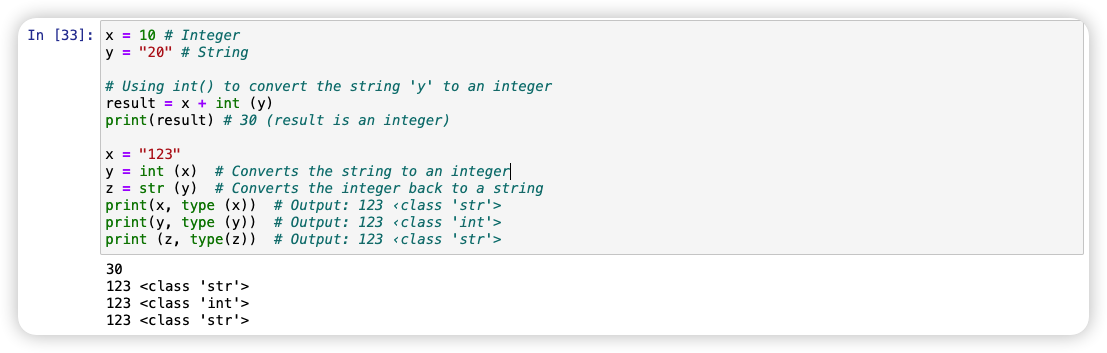
显式类型转换: 显式类型转换也称手动类型转换,要求程序员使用转换函数或构造函数显式指定所需的数据类型。这种方法提供了对类型转换的更多控制。
x = 10 # Integer
y = "20" # String

# Using int() to convert the string 'y' to an integer
result = x + int (y)
print(result) # 30 (result is an integer)

X = "123"
y = int (x)  # Converts the string to an integer
z = str (y)  # Converts the integer back to a string
print(x, type (x))  # Output: 123 ‹class 'str'>
print(y, type (y))  # Output: 123 ‹class 'int'>
print (z, type(z))  # Output: 123 ‹class 'str'>